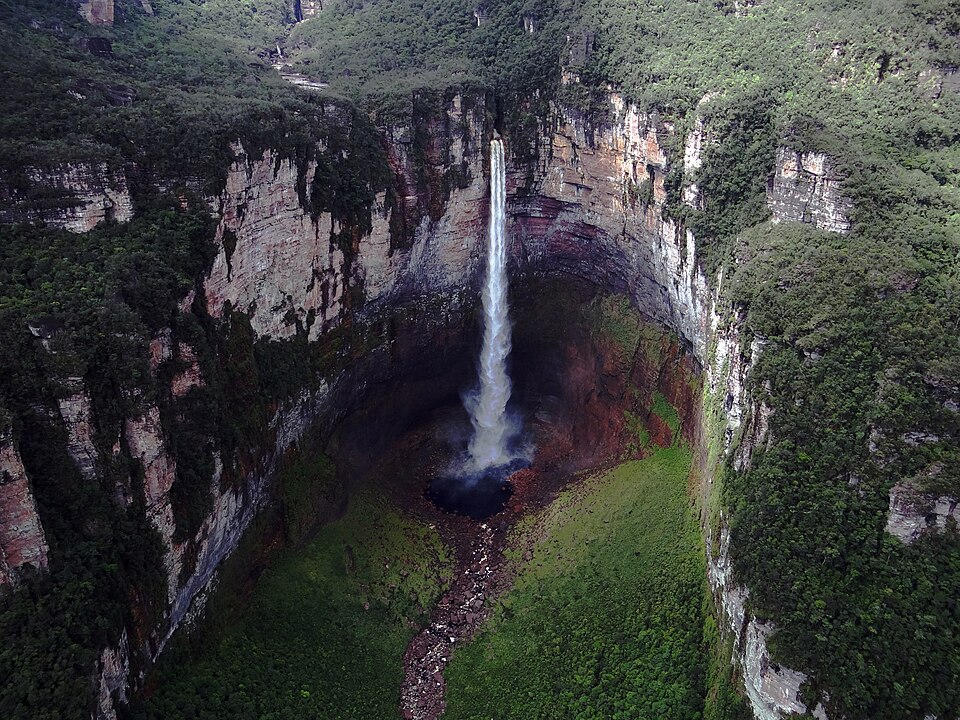
Photo: Churún Merú Falls, Canaima National Park · Heribert Dezeo · CC BY-SA 3.0
First-Timer Guide 🇻🇪Venezuela: What to Know Before You Go
Destination Intel / Venezuela
A typical first trip here runs about $550 to $750 per person for 7 days at a mid-range style, before flights. This is a rough estimate from PINYA regional pricing, not hand-reviewed yet, and not a live price. Real cost moves with your dates and exchange rates. Get a tailored number in the Budget Calculator, or have The Crown price your exact trip.
Culture, Food and Etiquette
- Arepas: Venezuela's foundational food, thick grilled or fried corn-dough rounds split and filled with countless combinations: reina pepiada (chicken-avocado), domino (black beans and white cheese), or pabellón (the full national plate); eaten for breakfast, lunch, and dinner
- Pabellón Criollo: The national dish, four components on one plate: shredded black beans (caraotas negras), white rice, shredded beef (carne mechada), and sweet fried plantains (tajadas); considered the edible symbol of Venezuela
- Hallacas: Corn masa parcels filled with a slow-cooked stew of beef, pork, chicken, olives, capers, and raisins, wrapped in plantain leaves and boiled, made exclusively at Christmas; each family's recipe is a closely guarded tradition
- Cachapa: Sweet fresh-corn pancake served folded around queso de mano (fresh white cheese), a beloved Llanos and roadside treat eaten as a snack or breakfast
- Tequeños: Fried bread-dough fingers stuffed with white cheese, Venezuela's iconic party food and airport snack, inseparable from celebrations and social gatherings
- Carnaval (Feb/Mar): Celebrated across the country, with El Callao (Bolívar state) hosting Venezuela's most famous carnival, a UNESCO Intangible Cultural Heritage featuring calypso music and distinctive madamas (women in traditional Afro-Caribbean dress) leading parades
- Feria del Sol, Mérida (Feb): Mérida's major festival in the Andes, bullfights, concerts, highland food, and cultural events celebrating Andean Venezuelan heritage
- Corpus Christi, Diablos Danzantes (Jun): Dancing Devil celebrations in towns like San Francisco de Yare (Miranda state), UNESCO-listed ceremony where costumed diablos (devils) parade through the streets in dramatic red costumes and painted masks
- Velorio de Cruz de Mayo (May): Folk religious ceremony honoring the Holy Cross with music, dancing, and altar offerings, celebrated in rural communities and Llanos towns
- Christmas Festivities (Dec): Venezuelans attend Misa de Aguinaldo (early morning masses Dec 16–24), roller-skate to church in Caracas on Christmas mornings, and prepare hallacas, the most elaborate holiday food tradition in Latin America
Spanish is the official language. Key phrases: Épale/Epa (Hey! / Greeting), Chévere (Cool/Great, quintessential Venezuelan slang), ¿Cómo estás, vale? (How are you, mate?). Major regions: Caracas (capital, Caribbean coast zone), Los Llanos (vast central plains, world-class birding and wildlife; Hato El Cedral), Mérida and the Andes (world's highest cable car, páramo highlands, coffee), Guayana (Angel Falls, Salto Ángel, the world's highest uninterrupted waterfall, in Canaima National Park), and Margarita Island (Caribbean beach resort). The Orinoco River delta and the Gran Sabana tepui tablelands are extraordinary natural wonders. Indigenous languages including Wayuunaiki, Pemón, and Yanomami are spoken by Venezuelan indigenous peoples.
- Venezuelans are warm and expressive; greetings involve cheek kisses between acquaintances regardless of gender, a handshake is for formal first meetings
- Current political and economic conditions are a sensitive topic, avoid unsolicited commentary on Venezuelan politics or the economy, as locals navigate these realities daily
- Food pride is intense: praising Venezuelan cuisine, especially arepas and hallacas, will earn immediate warmth; asking about family recipes is a sign of genuine respect
- Cash (USD is widely used alongside the bolívar) is essential, digital payments and credit cards are often unreliable outside major hotels; always carry bills
Common Questions
Is Venezuela safe to visit right now?+
Source: travel.state.gov
Latest for Venezuela
Updates for Venezuela will appear here as they are published. Every update cites official sources, so you can plan on it.