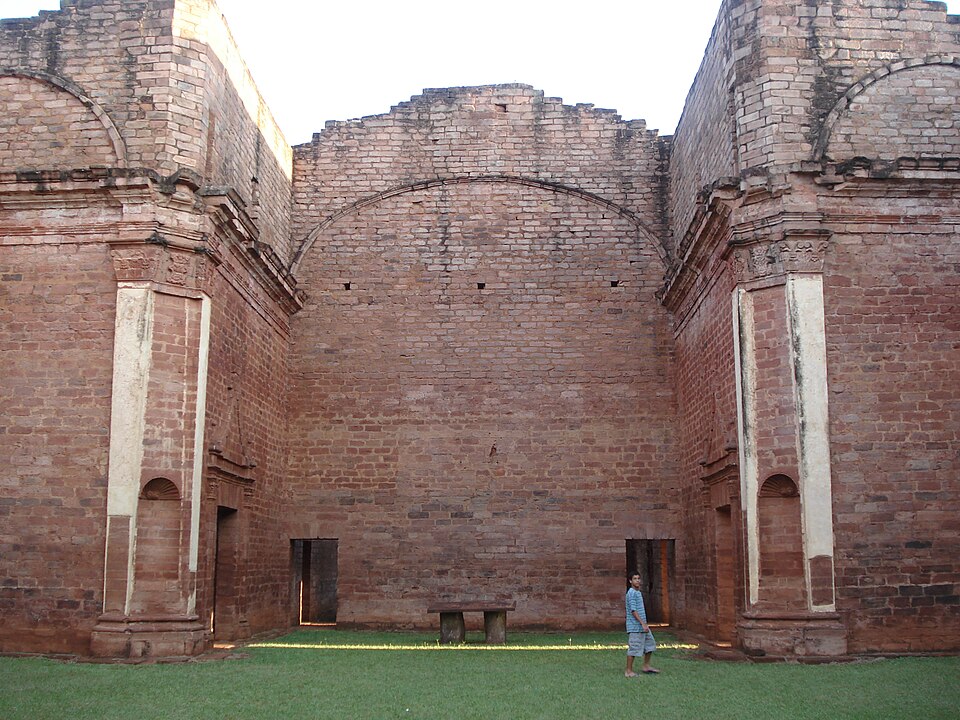
Photo: Jesús de Tavarangue · Public domain
First-Timer Guide 🇵🇾Paraguay: What to Know Before You Go
Destination Intel / Paraguay
A typical first trip here runs about $550 to $750 per person for 7 days at a mid-range style, before flights. This is a rough estimate from PINYA regional pricing, not hand-reviewed yet, and not a live price. Real cost moves with your dates and exchange rates. Get a tailored number in the Budget Calculator, or have The Crown price your exact trip.
Culture, Food and Etiquette
- Sopa Paraguaya: Despite the name ("Paraguayan soup"), it is a dense savory corn bread baked with cheese, onion, and sometimes pork, the national dish, served at every asado and family gathering
- Chipa: Chewy cheese bread rings made from cassava starch and anise-flavored; sold from baskets by vendors everywhere and consumed especially during Semana Santa, Paraguay's most consumed snack food
- Mbejú: Cassava starch and cheese flatbread cooked on a griddle, a pre-Columbian Guaraní food eaten for breakfast; simple, filling, and deeply traditional
- Bori-Bori: Chicken soup with cornmeal-and-cheese dumplings, a hearty Paraguayan comfort food served across the country in colder months
- Asado Paraguayo: Paraguay's interpretation of the South American barbecue, beef cooked over wood fire with intense smoky flavor; social asados (parrilladas) are the central ritual of Paraguayan weekend life
- Semana Santa (Holy Week): The most important religious event; chipa vendors fill every bus station and street; thousands make pilgrimages to Caacupé (pilgrimage capital) as preparation for the December 8 Virgen de los Milagros feast
- Fiesta de la Virgen de Caacupé (Dec 8): Paraguay's biggest religious gathering, over one million pilgrims converge on the Basílica de Caacupé ("Blue Virgin") for the Feast of the Immaculate Conception, many walking hundreds of kilometers
- Carnaval Encarnaceno (Jan–Feb): Encarnación city hosts the best-known Paraguayan carnival, influenced by neighboring Argentina's Gualeguaychú, elaborate floats, sequined costumes, and samba-influenced comparsa groups
- Festival Internacional de Teatro (Sep): Asunción hosts Latin America's second-oldest international theater festival, drawing companies from across the continent
- Día de la Independencia (May 14–15): Paraguay's independence (1811) celebrated with military parades, cultural performances, and civic events in Asunción's Plaza de los Héroes
Paraguay is uniquely bilingual: Spanish and Guaraní are both official languages and both are spoken daily by the majority of Paraguayans, one of the only countries in the Americas where an indigenous language has equal standing with Spanish. Key Guaraní phrases: Mba'éichapa reiko (How are you?), Aguyje (Thank you), Jajotopata (Let's go). Tereré (cold yerba mate with medicinal herbs, especially mint and cedron) is the national beverage and social ritual; sharing tereré from a guampa (cup) and bombilla (metal straw) with strangers is a common gesture of friendship. Major regions: Asunción (capital), Central department (densely populated suburbs), Itapúa (Encarnación, Jesuit ruins), the Chaco (vast semi-arid western lowland, 60% of territory, home to Mennonite colonies and indigenous Ayoreo communities).
- Accepting an offer of tereré is almost mandatory socially, refusing tereré from a Paraguayan host without a clear reason (health) can be seen as a rejection of friendship
- Guaraní is used freely in conversation even between bilingual speakers; attempting even a word of Guaraní (Aguyje!) will earn genuine delight and appreciation
- Paraguayans are relaxed about time, social events run late and punctuality expectations are loose; adapt rather than insisting on rigid schedules
- The Chaco region near the Bolivian and Brazilian borders is remote with extreme heat, if visiting Mennonite colonies or indigenous communities, respect their distinct customs, dress modestly, and always seek permission before photographing
Best Time to Visit
Paraguay is subtropical with reversed seasons; the milder half of the year is the more comfortable time to visit, while summer is hot and humid.
- Peak: April to September
- Shoulder: March, October
- Off season: December to February, the hot summer
Source: meteorologia.gov.py
Getting Around
- Buses link the cities across the country.
- Asuncion has a bus network.
- A car helps for reaching the interior and the Jesuit missions.
Source: travel.state.gov
What moves the cost: Paraguay is an affordable destination overall, and Asuncion events and the milder months are the busiest.
Common Questions
Do US citizens need a visa to visit Paraguay?+
Source: travel.state.gov
Is Paraguay safe for first-time travelers?+
Source: travel.state.gov
Latest for Paraguay
Updates for Paraguay will appear here as they are published. Every update cites official sources, so you can plan on it.