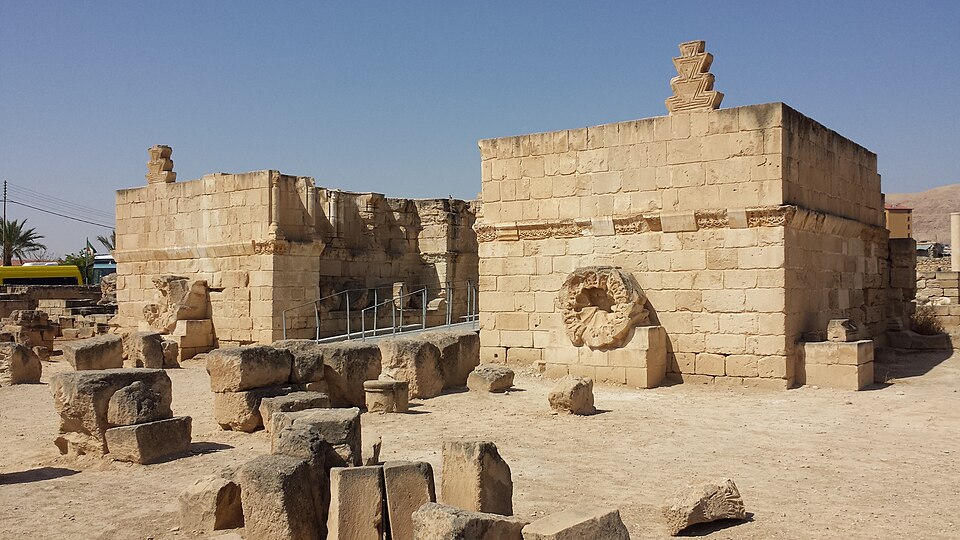
Photo: Hisham's Palace · Randa Fawzi · CC BY-SA 4.0
First-Timer Guide 🇵🇸Palestine: What to Know Before You Go
Destination Intel / Palestine
Travel advisory: The US State Department lists Palestine as Do Not Travel. This page is here to help you understand the place, not to plan a trip there. Read the safety report and check the official advisory before you make any decision.
Culture, Food and Etiquette
- Musakhan, Palestinian national dish; slow-roasted chicken on flatbread topped with caramelized onions, sumac, pine nuts, and olive oil; deeply symbolic of the land
- Maqluba, "upside-down" dish of rice, vegetables, and meat cooked in a pot then flipped; a showstopper served at family celebrations
- Knafeh, Nablus's gift to the world; shredded pastry soaked in sugar syrup filled with stretchy cheese; one of the Middle East's most iconic desserts
- Palestinian olive oil, one of the world's oldest and finest; families have pressed oil from the same ancient trees for generations; an act of cultural preservation
- Olive harvest (October–November), families gather to harvest ancient olive groves; a ritual of cultural continuity and resistance that has occurred for millennia
- Eid celebrations, Eid Al-Fitr and Eid Al-Adha are the main holidays; celebrated with communal prayers, feasts, and charitable giving
- Embroidery (tatreez), Palestinian cross-stitch embroidery is UNESCO Intangible Heritage; each village's pattern tells a story of place and identity
Arabic (Palestinian dialect) is the primary language. English is spoken in Ramallah, East Jerusalem, and among the educated class.
Hebrew is understood by many Palestinians who have worked in Israel. Key phrase: "Ahlan wa sahlan" (أهلاً وسهلاً) means welcome; "Yislamo" (يسلموا) is a warm thanks.
Travel to Gaza is not possible for international tourists due to ongoing conflict. The West Bank is accessible with careful planning, check current security conditions thoroughly.
- Palestinian hospitality is extraordinary, expect to be offered coffee (qahwa), tea, and food everywhere; accepting is an act of connection
- Be sensitive about political discussions, listen with respect; the situation is complex and deeply personal for every Palestinian
- Dress modestly especially in Hebron and more conservative areas; women should cover hair when entering mosques
- Checkpoint crossings between Palestinian Authority areas and Israeli-controlled zones require patience; carry all documentation and remain calm
Getting Around
- Shared taxis, called service, link the West Bank towns.
- Travel between areas passes through checkpoints.
- A local guide helps for reaching the main sites.
Source: travel.state.gov
Common Questions
Do US citizens need a visa to visit the West Bank?+
Entry to the West Bank and Gaza is controlled by Israeli authorities and can change; check the US State Department page for the current requirements before you go.
Source: travel.state.gov
Is the West Bank safe for first-time travelers?+
The US State Department publishes a current travel advisory that covers Israel, the West Bank and Gaza, with area-specific guidance; check it for the areas you plan to visit before you go.
Source: travel.state.gov
Latest for Palestine
Updates for Palestine will appear here as they are published. Every update cites official sources, so you can plan on it.