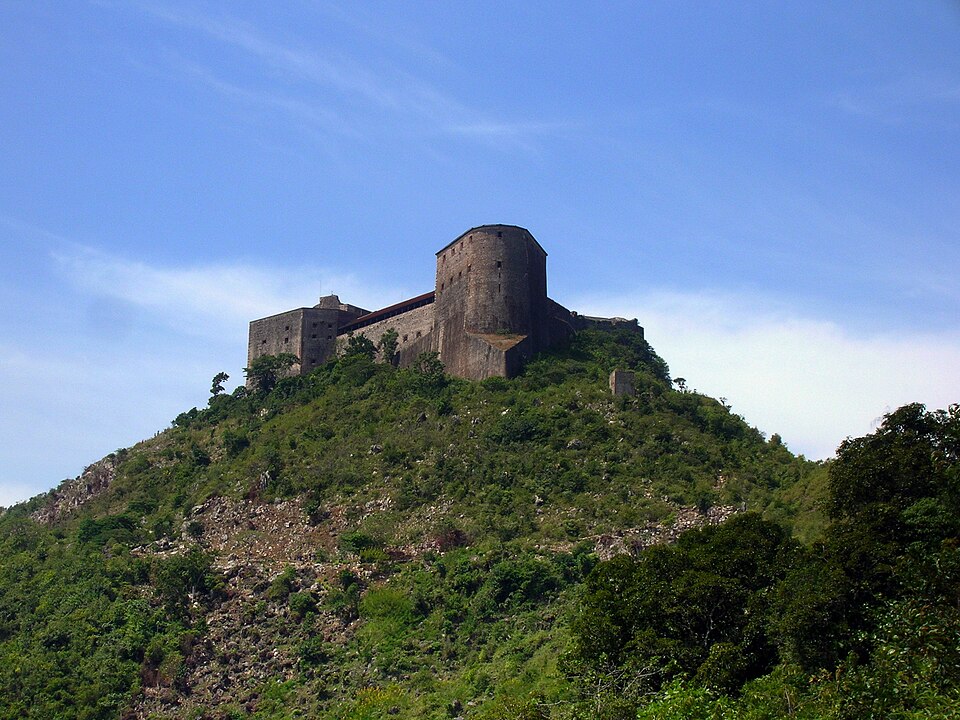
Photo: Citadelle Laferrière · Rémi Kaupp · CC BY-SA 3.0
First-Timer Guide 🇭🇹Haiti: What to Know Before You Go
Destination Intel / Haiti
Culture, Food and Etiquette
- Griot: Marinated and twice-cooked pork (boiled then fried) seasoned with Scotch bonnet peppers, lime, and epis spice paste, Haiti's beloved national dish served with pikliz
- Joumou Soup (Soup Joumou): Pumpkin soup with beef, pasta, vegetables, and spices, traditionally eaten every January 1st to commemorate Haitian independence (1804); now inscribed on UNESCO's Intangible Cultural Heritage list
- Pikliz: Fiery pickled cabbage and vegetable condiment with habanero peppers, cloves, and lime, Haiti's essential table condiment, served with virtually every meal
- Diri ak Djon Djon: Black mushroom rice, a delicacy from the northern city of Cap-Haïtien where the rare djon djon mushrooms grow, served at special occasions and celebrations
- Akra: Crispy malanga (taro) fritters seasoned with Scotch bonnet and herbs, popular street snack and party appetizer across Haiti
- Kanaval (Haitian Carnival, Feb/Mar): One of the Caribbean's most vibrant carnivals, massive street parties in Port-au-Prince, Jacmel, and Cap-Haïtien with rara bands, elaborate floats, and compas music over three days before Ash Wednesday
- Independence Day (Jan 1): The world's first Black republic celebrates with Soup Joumou eaten across the nation; a deeply emotional national holiday
- Fête Gede (Nov 1–2): Vodou celebration of the Gede lwa (spirits of the dead), devotees dressed in purple and black gather at cemeteries, especially the National Cemetery in Port-au-Prince, for rum-soaked rituals and offerings
- Jacmel Arts Festival (Jan–Feb): Jacmel's renowned papier-mâché mask tradition showcased at the annual festival, the city is Haiti's cultural capital and a UNESCO Creative City
- Rara Processions (Easter Week): Rural Vodou-linked street processions with bamboo vaksin horns, drums, and decorated floats winding through towns and neighborhoods
Haitian Creole (Kreyòl ayisyen) and French are both official languages; Creole is spoken by all 11 million Haitians while French is used in government and formal education. Key Creole phrases: Bonjou (Good morning), Mèsi (Thank you), Kijan ou rele? (What is your name?), Kombyen li koute? (How much does it cost?). Major regions: Ouest (Port-au-Prince), Nord (Cap-Haïtien, historic Citadelle Laferrière), Sud (Les Cayes), and Artibonite (Gonaïves, "City of Independence"). Jacmel in the Sud-Est department is the artistic heart of the country, famous for its iron art, papier-mâché, and colonial gingerbread architecture.
- Vodou (Vaudou) is a legitimate religious practice deeply intertwined with Haitian identity, approach it with respect and avoid sensationalist or stereotypical references
- Haitians are deeply proud of their revolutionary history as the first free Black republic; acknowledging this history respectfully is widely appreciated
- Dress modestly and conservatively, especially in church communities (a majority practice Christianity alongside or within Vodou traditions)
- Photography of individuals, especially during religious ceremonies, requires explicit permission, always ask before photographing people or rituals
Common Questions
Is Haiti safe to visit right now?+
Source: travel.state.gov
Latest for Haiti
Updates for Haiti will appear here as they are published. Every update cites official sources, so you can plan on it.