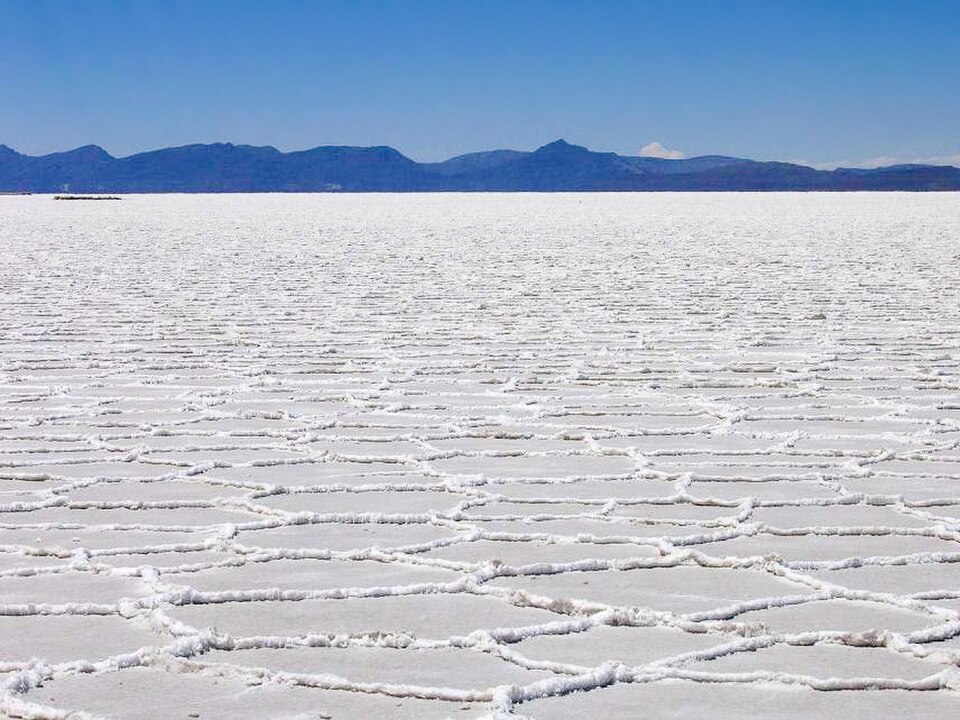
Photo: Salar de Uyuni · Anouchka Unel · FAL
First-Timer Guide 🇧🇴Bolivia: What to Know Before You Go
Destination Intel / Bolivia
A typical first trip here runs about $500 to $650 per person for 7 days at a mid-range style, before flights. This is a rough estimate from PINYA regional pricing, not hand-reviewed yet, and not a live price. Real cost moves with your dates and exchange rates. Get a tailored number in the Budget Calculator, or have The Crown price your exact trip.
Culture, Food and Etiquette
- Salteñas: Bolivia's beloved mid-morning snack, baked empanadas with a sweet-spicy juicy filling of chicken or beef, potatoes, olives, raisins, and hard-boiled egg in gelatin broth; eating them without spilling is an art form
- Silpancho: Cochabamba's signature dish, thin pounded beef cutlet breaded and fried, served over rice and boiled potatoes, topped with a fried egg and fresh tomato-onion salsa (llajua)
- Fricasé: La Paz's traditional hangover breakfast, spicy pork soup with hominy (mote), chuño (freeze-dried black potato), and yellow chili, served on weekend mornings from pre-dawn
- Chuño: Freeze-dried potatoes, a 2,000-year-old Andean preservation technology from the Altiplano where overnight frost and daytime sun dehydrate potatoes; an indispensable ingredient throughout Bolivian cooking
- Api: Warm purple corn drink thickened with spices, the traditional breakfast beverage of the Altiplano served with pastel (fried dough); ubiquitous in La Paz morning markets
- Carnaval de Oruro (Feb/Mar): UNESCO Masterpiece of Oral and Intangible Heritage, Bolivia's most spectacular festival; the Diablada (Devil Dance) and Morenada are performed by thousands of elaborately costumed dancers over four days of processions
- Alasitas (Jan 24): La Paz's unique fair of miniatures, Bolivians buy tiny replicas of desired items (houses, cars, diplomas, US dollars) blessed by an Ekeko figurine (god of abundance) to manifest real-life fulfillment
- Fiesta de la Virgen de Urkupiña (Aug 15): Quillacollo (near Cochabamba), one of South America's largest pilgrimages; devotees break rocks from a sacred hill to take home as blessings for future prosperity
- Todos Santos (Nov 1–2): All Souls' Day, families build elaborate food altars (mesas) for deceased relatives, with favorite foods and beverages left out for souls returning to visit; cemeteries become festive gathering spaces
- Gran Poder (May/Jun): La Paz's massive folkloric festival, a nine-hour parade through the city streets with 30,000+ dancers performing in 70+ folk dance groups representing Bolivia's diverse cultural regions
Spanish is the primary official language; Bolivia has 36 recognized indigenous languages including Quechua (spoken by ~2.5 million), Aymara (spoken by ~1.6 million in the Altiplano), and Guaraní. Key phrases: Jallalla (Aymara: Long live!, used in celebrations), Sumaj (Quechua: Beautiful/Great), ¿Cuánto es? (How much is it?). Major cities: La Paz (seat of government, 3,640m, the world's highest capital; acclimatize carefully for altitude sickness), Sucre (constitutional capital, UNESCO city, 2,750m), Cochabamba ("City of Eternal Spring," culinary capital, 2,500m), Santa Cruz (lowland economic hub, tropical), Potosí (3,967m, UNESCO city, former silver-mining center), and Oruro (carnival city, 3,702m). The Salar de Uyuni (world's largest salt flat) and Titicaca Lake are iconic natural wonders.
- Altitude sickness (soroche) is real at La Paz and Potosí, drink coca tea (mate de coca) which locals offer freely; rest on arrival day and avoid alcohol for 24–48 hours
- Indigenous culture and the Pachamama (Mother Earth) worldview are deeply respected; ask before photographing indigenous women in traditional dress, some communities request payment or decline entirely
- Coca leaf (hoja de coca) is a sacred and legal plant in Bolivia, used for altitude sickness, ceremony, and daily life; do not confuse or demean its cultural significance
- Cholita wrestling matches in El Alto are both entertainment and cultural tourism, attend respectfully and understand you are watching a theatrical tradition with deep social meaning for the Aymara community
Best Time to Visit
Bolivia's weather is shaped by altitude; the dry season is the popular time for the highlands and the salt flats, while the wet season brings rain that can also mirror the sky on the Uyuni flats.
- Peak: May to October
- Shoulder: April, November
- Off season: December to March, the wet season
Source: senamhi.gob.bo
Getting Around
- Domestic flights cover the long distances and steep altitude changes.
- Long-distance buses are widely used between cities.
- Allow time to acclimatize to the altitude in La Paz and the highlands.
Source: travel.state.gov
What moves the cost: Bolivia is an affordable destination overall, and the dry-season peak on the salt flats is the busiest.
Common Questions
Do US citizens need a visa to visit Bolivia?+
Source: travel.state.gov
Is Bolivia safe for first-time travelers?+
Source: travel.state.gov
Latest for Bolivia
Updates for Bolivia will appear here as they are published. Every update cites official sources, so you can plan on it.