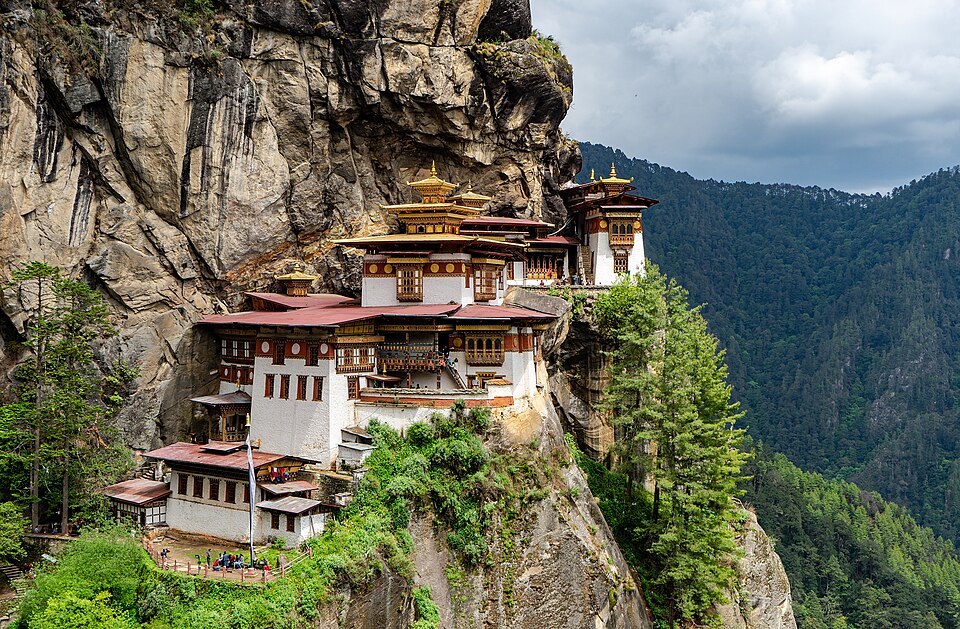
Photo: Paro Taktsang · Original: Nina R from Africa Derivative work: UnpetitproleX · CC BY 2.0
First-Timer Guide 🇧🇹Bhutan: What to Know Before You Go
Destination Intel / Bhutan
A typical first trip here runs about $850 to $1,150 per person for 7 days at a mid-range style, before flights. This is a rough estimate from PINYA regional pricing, not hand-reviewed yet, and not a live price. Real cost moves with your dates and exchange rates. Get a tailored number in the Budget Calculator, or have The Crown price your exact trip.
Culture, Food and Etiquette
- Ema datshi, whole red or green chillis cooked in a cheese sauce; the national dish and eaten at virtually every meal
- Phaksha paa, pork cooked with dried red chillis and radishes; a hearty highland staple especially in winter
- Jasha maroo, spiced minced chicken or turkey stir-fried with tomatoes, ginger, and chilli
- Red rice, nutty, chewy short-grain rice grown in Paro Valley; central to Bhutanese meals
- Suja (butter tea), tea churned with yak butter and salt; acquired taste but central to mountain hospitality
- Tshechus (religious mask dance festivals), held at dzongs (fortresses) across the country; each district has its own annual tshechu
- Paro Tshechu (March/April), the most famous festival; the giant thangka (silk painting) unrolled at dawn is a once-in-a-lifetime sight
- Punakha Drubchen, mock battle reenactment commemorating a 17th-century victory over Tibetan invaders
- National Day (December 17), commemorates the coronation of Bhutan's first hereditary king in 1907
Dzongkha is the official national language; English is the medium of instruction in schools and widely spoken by educated Bhutanese. All visitors must book through a licensed tour operator as part of Bhutan's "High Value, Low Impact" tourism policy.
Key phrase: "Kuzu zangpo la" (ཀུ་ཟུ་བཟང་པོ་ལགས) means hello and is always warmly received.
- Wear traditional Bhutanese dress (gho for men, kira for women) to enter dzongs and government offices, your guide will advise
- Photography inside temples and dzongs is often prohibited, always check before raising your camera
- Walk clockwise around all religious monuments, chortens, and mani walls, this applies throughout the Himalayan Buddhist world
- Remove shoes before entering all temples and monasteries, socks are acceptable inside
Best Time to Visit
Bhutan's weather varies sharply with altitude; spring and autumn bring the clearest skies and are the popular seasons, while the summer monsoon is wet and winter is cold at altitude.
- Peak: March to May, September to November
- Shoulder: December, June
- Off season: July to August, the monsoon
Source: nchm.gov.bt
Getting Around
- Travel is usually arranged through a licensed tour operator with a guide and driver.
- Roads are winding and mountainous, so journeys take time.
- Domestic flights link a few towns.
Source: travel.state.gov
What moves the cost: Bhutan charges a Sustainable Development Fee for each day of a visit, so the length of stay sets much of the cost.
Common Questions
Do US citizens need a visa to visit Bhutan?+
Source: travel.state.gov
Is Bhutan safe for first-time travelers?+
Source: travel.state.gov
Latest for Bhutan
Updates for Bhutan will appear here as they are published. Every update cites official sources, so you can plan on it.