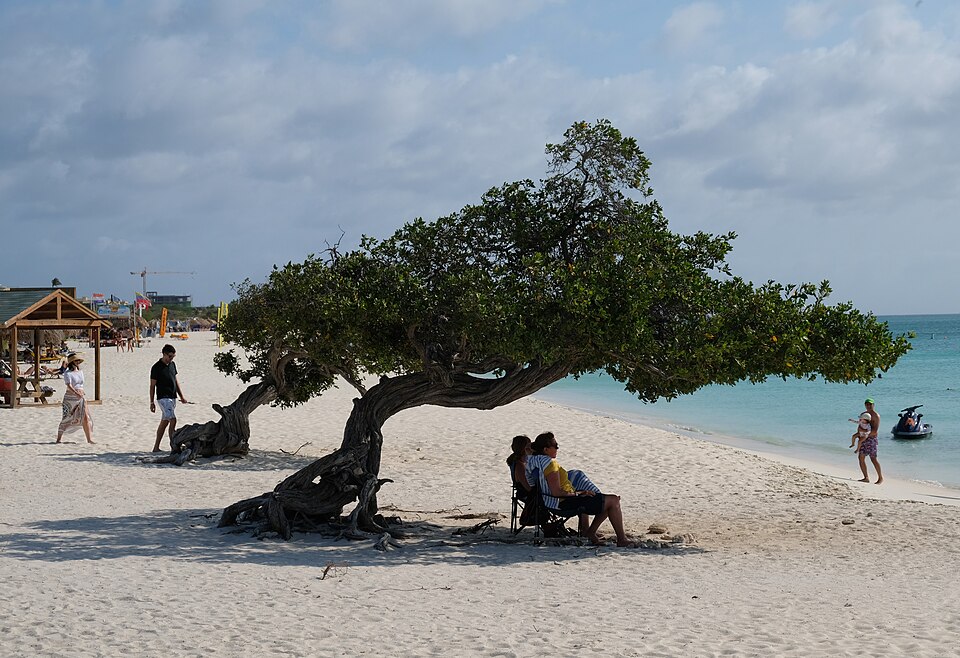
Photo: Eagle Beach · SIryn · CC BY-SA 4.0
First-Timer Guide 🇦🇼Aruba: What to Know Before You Go
Destination Intel / Aruba
A typical first trip here runs about $1,350 to $1,825 per person for 7 days at a mid-range style, before flights. This is a rough estimate from PINYA regional pricing, not hand-reviewed yet, and not a live price. Real cost moves with your dates and exchange rates. Get a tailored number in the Budget Calculator, or have The Crown price your exact trip.
Culture, Food and Etiquette
- Keshi Yena: Aruba's signature dish, a whole scooped-out Edam or Gouda cheese rind stuffed with spiced stewed chicken or beef, raisins, olives, capers, and peppers, then baked until melted; a legacy of Dutch colonial trade
- Pan Bati: Aruban cornmeal pancake, thicker and denser than a crepe, slightly sweet, served alongside fish, meat, or soup as a bread substitute
- Sopi Mondongo: Tripe soup with vegetables, spices, and lime, a traditional Aruban comfort food eaten at family gatherings and local restaurants (not touristy)
- Funchi: Cornmeal porridge similar to Italian polenta, the starchy staple of Aruban cooking, served as a side with stewed meats and seafood
- Stroopwafel and Dutch Treats: Reflecting Aruba's Dutch heritage, Dutch stroopwafels, hagelslag (sprinkles on bread), and Dutch cheeses are consumed alongside Caribbean staples in everyday Aruban life
- Aruba Carnival (Jan–Feb): Aruba's Carnival season lasts nearly two months, the Gran Marcha (Grand Parade) in Oranjestad is the spectacular finale with elaborate costumes, soca, tumba, and zouk music
- Dia di San Juan (Jun 24): Midsummer festival with traditional seú (harvest dance), folk music, and bonfires, one of Aruba's oldest cultural traditions rooted in indigenous Caquetío and African heritage
- Dera Gai (Aug): Traditional Aruban harvest festival with folk dancing, local food, and the symbolic "burying of the rooster", a centuries-old agricultural celebration
- Aruba Soul Beach Music Festival (May): Major R&B and soul music event drawing international artists and thousands of visitors over Memorial Day weekend
- Aruba Hi-Winds Windsurfing and Kiteboarding (Jun–Jul): World-class wind sports competition at Aruba's famous Fisherman's Huts, the island's trade winds rank among the best in the world
Papiamento (also spelled Papiamentu) is Aruba's native creole language and a co-official language alongside Dutch; English and Spanish are both widely spoken, making Aruba one of the most multilingual islands in the Caribbean. Key Papiamento phrases: Bon dia (Good morning), Masha danki (Thank you very much), Con ta bai? (How are you?). Aruba is one of the ABC Islands, Aruba, Bonaire, and Curaçao, which are all Dutch constituent countries or special municipalities located just off the Venezuelan coast, outside the hurricane belt. Oranjestad is the capital; Palm Beach and Eagle Beach on the northwest coast are the main tourist zones. San Nicolaas (the "oil city") in the south has a distinct Aruban industrial heritage and vibrant mural art scene.
- Arubans are genuinely friendly, "One Happy Island" is more than a slogan; locals take pride in hospitality and patience with tourists
- Learning even a single Papiamento phrase like Masha danki (Thank you very much) earns enormous goodwill from locals
- Dutch influence means business culture is relatively punctual and organized; appointments and reservations are taken seriously
- Respect the natural environment: Aruba's desert landscape with divi-divi trees, cacti, and the Arikok National Park is fragile, stay on marked trails and never remove natural materials
Best Time to Visit
Aruba has a warm, dry, semi-arid tropical climate and sits south of the main hurricane belt, so conditions are pleasant much of the year.
- Peak: December to April
- Shoulder: May to August
- Off season: September to November, the rainier months
Source: meteo.aw
Getting Around
- Buses run along the main hotel strip and to Oranjestad.
- Taxis are widely available.
- Renting a car or jeep helps for reaching the wilder east coast.
Source: travel.state.gov
What moves the cost: The winter high season and the holidays cost the most, while the low season is cheaper.
Common Questions
Do US citizens need a visa to visit Aruba?+
Source: travel.state.gov
Is Aruba safe for first-time travelers?+
Source: travel.state.gov
Latest for Aruba
Updates for Aruba will appear here as they are published. Every update cites official sources, so you can plan on it.