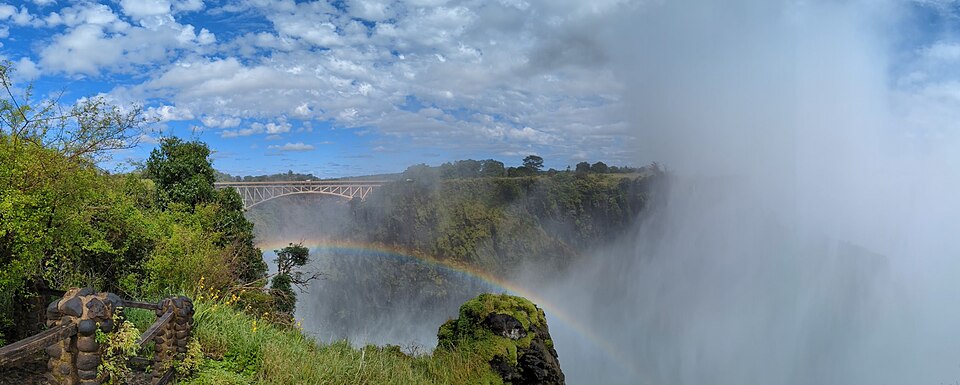
Photo: Victoria Falls Bridge · Dicklyon · CC BY-SA 4.0
First-Timer Guide 🇿🇲Zambia: What to Know Before You Go
Destination Intel / Zambia
A typical first trip here runs about $675 to $900 per person for 7 days at a mid-range style, before flights. This is a rough estimate from PINYA regional pricing, not hand-reviewed yet, and not a live price. Real cost moves with your dates and exchange rates. Get a tailored number in the Budget Calculator, or have The Crown price your exact trip.
Culture, Food and Etiquette
- Nshima, thick white maize porridge shaped into balls and eaten with the fingers; the cornerstone of every Zambian meal, consumed two to three times daily
- Ifisashi, vegetables (usually pumpkin leaves or cabbage) cooked in a rich groundnut paste; a vegetarian staple across the country
- Chikanda, a dense, savory cake made from ground orchid tubers mixed with groundnuts and chili; nicknamed "African polony"
- Kapenta, tiny dried lake sardines from Lake Tanganyika or Kariba; fried or stewed and eaten with nshima as relish
- Roasted flying ants (inswa), seasonal delicacy harvested after the first rains and fried in their own oil
- Kuomboka Ceremony, Lozi king (Litunga) is transported by royal barge from the flooded Barotse floodplain to higher ground each year; one of Africa's most spectacular royal ceremonies
- Nc'wala Ceremony, first-fruits festival of the Ngoni people of Eastern Zambia held in February; the king tastes the first crop before the community may eat
- Likumbi Lya Mize, Luvale people's annual cultural festival featuring the famous Makishi masked dancers who represent ancestral spirits
- Zambia Independence Day (October 24), marks independence from Britain in 1964; celebrated with national sporting events and cultural performances
- Livingstone Cultural Carnival, music and cultural festival held near the Victoria Falls celebrating Zambian and regional heritage
English is the official language of government and education. Over 70 Bantu languages are spoken; Bemba (north), Nyanja (east and Lusaka), Tonga (south), and Lozi (west) are the major regional languages. Key Nyanja phrases: "Moni" (hello), "Zikomo" (thank you), "Muli bwanji?" (how are you?). Zambians are famously warm and hospitable; the national humor is self-deprecating and resilient. Conversation is friendly and unhurried.
- Use both hands or support your right hand with your left when giving or receiving items, this signals respect across most Zambian cultures
- Greet everyone individually rather than giving a single group greeting; acknowledging each person is important
- Royal ceremonies like Kuomboka have strict protocols, dress smartly, observe silently until invited to participate, and ask guides about photography rules
- Anti-poaching sentiment is strong; never purchase ivory, bushmeat, or wildlife products, penalties are severe
Best Time to Visit
Zambia is tropical; the dry season is the prime time for safaris and for viewing Victoria Falls, while the wet season is green and quieter.
- Peak: May to October
- Shoulder: April, November
- Off season: December to March, the wet season
Source: zmd.gov.zm
Getting Around
- Domestic flights link the parks, Livingstone and Lusaka.
- Safaris usually include guided transport.
- Roads to remote parks can be rough in the wet season.
Source: travel.state.gov
What moves the cost: Remote safari lodges and the dry-season peak drive the largest costs, while the green season is cheaper.
Common Questions
Do US citizens need a visa to visit Zambia?+
Source: travel.state.gov
Is Zambia safe for first-time travelers?+
Source: travel.state.gov
Latest for Zambia
Updates for Zambia will appear here as they are published. Every update cites official sources, so you can plan on it.