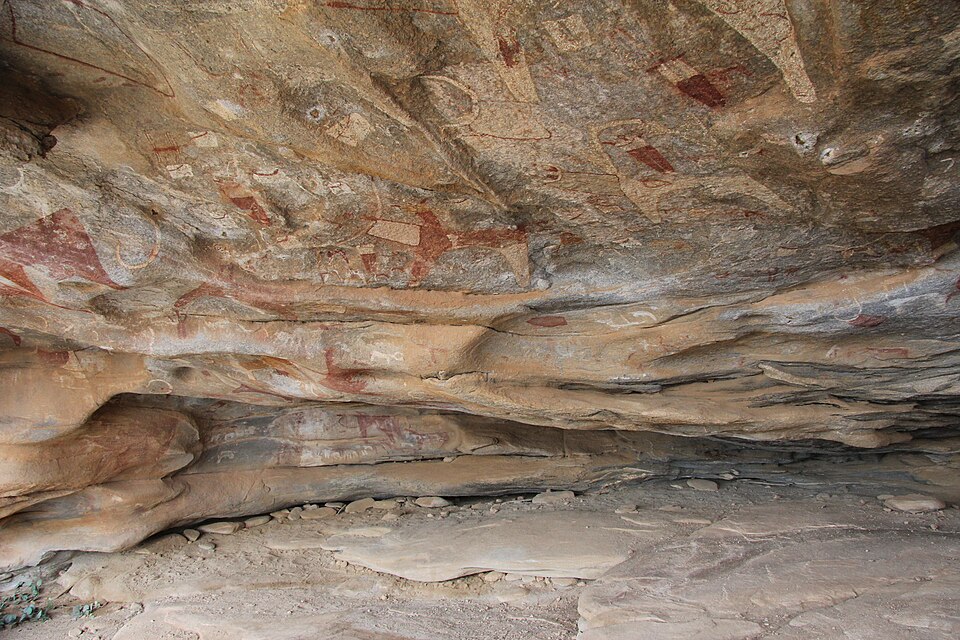
Photo: Laas Geel cave paintings · joepyrek · CC BY-SA 2.0
First-Timer Guide 🇸🇴Somalia: What to Know Before You Go
Destination Intel / Somalia
Travel advisory: The US State Department lists Somalia as Do Not Travel. This page is here to help you understand the place, not to plan a trip there. Read the safety report and check the official advisory before you make any decision.
Culture, Food and Etiquette
- Bariis iskukaris, Somali-spiced rice cooked with cardamom, cumin, and cinnamon; served with goat, camel, or chicken; a fragrant feast dish rooted in Indian Ocean trade
- Canjeero, large sourdough flatbread similar to Ethiopian injera; eaten for breakfast with honey, ghee, or bean stew; the cornerstone of Somali morning meals
- Suqaar, cubed beef or camel stir-fried with vegetables and spices; a quick, flavorful everyday meat dish eaten with rice or bread
- Shaah, sweet spiced Somali tea made with cardamom, ginger, and cinnamon; a cornerstone of Somali hospitality and social life
- Eid Al-Fitr and Eid Al-Adha, the most important celebrations; Somalia is nearly 100% Muslim; Eid is celebrated with new clothing, communal prayers, and feasts
- Oral poetry tradition, Somalia has one of the world's richest traditions of oral poetry; the "nation of poets" prides itself on poetry as a form of leadership, diplomacy, and art
- Somaliland independence day (May 18), the self-declared independent republic in the north celebrates its independence with parades and festivities in Hargeisa
Somali and Arabic are the official languages. Key Somali phrase: "Nabad" (peace) is the standard greeting.
Somalia has been in a state of civil war and instability since 1991, most Western governments advise against all travel to southern and central Somalia. Somaliland (north) is significantly more stable and has a modest but growing tourist infrastructure in Hargeisa; Puntland (northeast) is transitional.
Any visit requires local contacts, current intelligence, and security arrangements.
- Somalia is a conservative Muslim society, dress fully modestly; women must cover hair and wear loose clothing covering all limbs
- Clan identity is fundamental to Somali society, be aware that social and political dynamics are deeply shaped by clan affiliations; do not comment on these divisions
- Somali hospitality (xaasil) is legendary, guests are honored above family members; accept food and tea with genuine gratitude
- Photography in public spaces is sensitive, Al-Shabaab remains active in parts of the country; security awareness is paramount at all times
Common Questions
Is Somalia safe to visit right now?+
The US State Department advises Do Not Travel to Somalia due to terrorism, kidnapping, crime, civil unrest and piracy in coastal waters; check the advisory before any travel.
Source: travel.state.gov
Latest for Somalia
Updates for Somalia will appear here as they are published. Every update cites official sources, so you can plan on it.