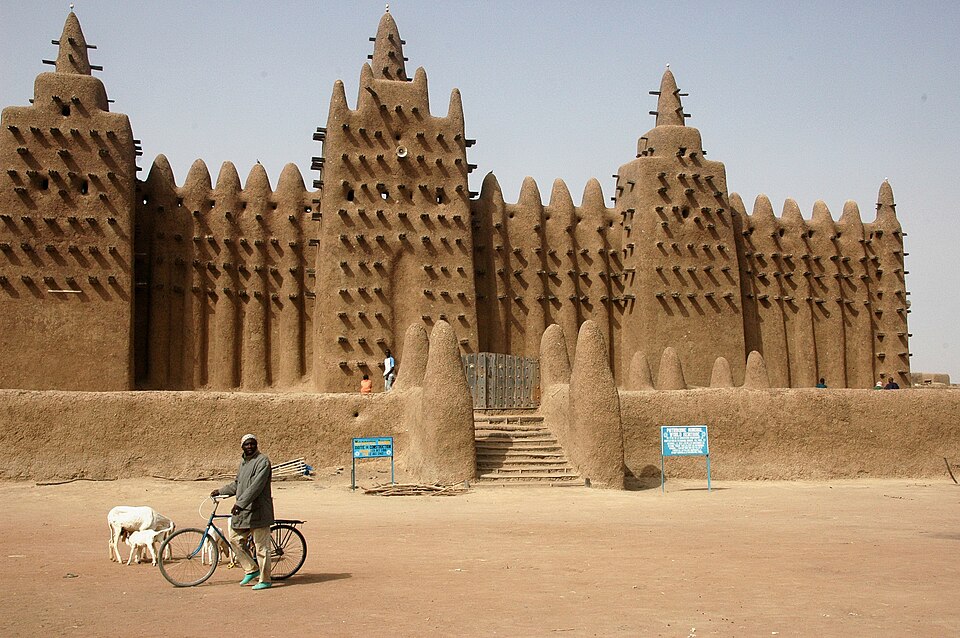
Photo: Great Mosque of Djenné · Ruud Zwart · CC BY-SA 3.0
First-Timer Guide 🇲🇱Mali: What to Know Before You Go
Destination Intel / Mali
Travel advisory: The US State Department lists Mali as Do Not Travel. This page is here to help you understand the place, not to plan a trip there. Read the safety report and check the official advisory before you make any decision.
Culture, Food and Etiquette
- Tô, thick millet or sorghum paste; Mali's foundational staple; eaten daily with a variety of sauces including okra, baobab leaf (fakoye), and peanut
- Tigadeguena, peanut butter stew with chicken or beef; Mali's version of the West African groundnut stew; rich, nutty, and warming
- Grilled capitaine (Nile perch), caught fresh from the Niger River; grilled whole over charcoal with tomato sauce; a specialty of Bamako's riverside restaurants
- Dolo, millet beer brewed by women and served in calabash; a social cornerstone of non-Muslim Malian communities
- Festival in the Desert (Essakane, near Timbuktu), was formerly one of the world's greatest music festivals; suspended due to security situation but lives on in cultural memory
- Dogon mask ceremonies, the Dogon people of the Bandiagara Escarpment perform extraordinary masked dances (Dama) for funerals and seasonal ceremonies
- Timbuktu manuscripts heritage, Mali was a center of Islamic scholarship in the 14th–16th centuries; thousands of manuscripts survive recording astronomy, medicine, and theology
French is the official language. Bambara (Dioula) is the most widely spoken national language; Tuareg, Fulani, and Dogon are among the many others.
Key Bambara phrase: "I ni ce" (ee ni chay) means hello/good morning. Mali has experienced serious jihadist insurgency since 2012, the north of the country including Timbuktu is extremely dangerous; most Western governments advise against travel to most of Mali.
The Dogon country in the south was historically more accessible; verify current conditions.
- Malian culture places extraordinary value on greetings, lengthy, elaborate greetings asking about family, health, and work are mandatory before any interaction
- The Dogon people of the Bandiagara Cliffs have specific protocols for visiting their villages, always hire a Dogon guide and follow their guidance on sacred areas
- Mali is a majority-Muslim country, dress modestly especially in northern regions; alcohol is less common outside Bamako
- Griots (jali) are the traditional oral historians and musicians, their knowledge and performances are of immense cultural importance; listen with respect
Common Questions
Is Mali safe to visit right now?+
The US State Department advises Do Not Travel to Mali due to terrorism, kidnapping and crime; check the advisory before any travel.
Source: travel.state.gov
Latest for Mali
Updates for Mali will appear here as they are published. Every update cites official sources, so you can plan on it.