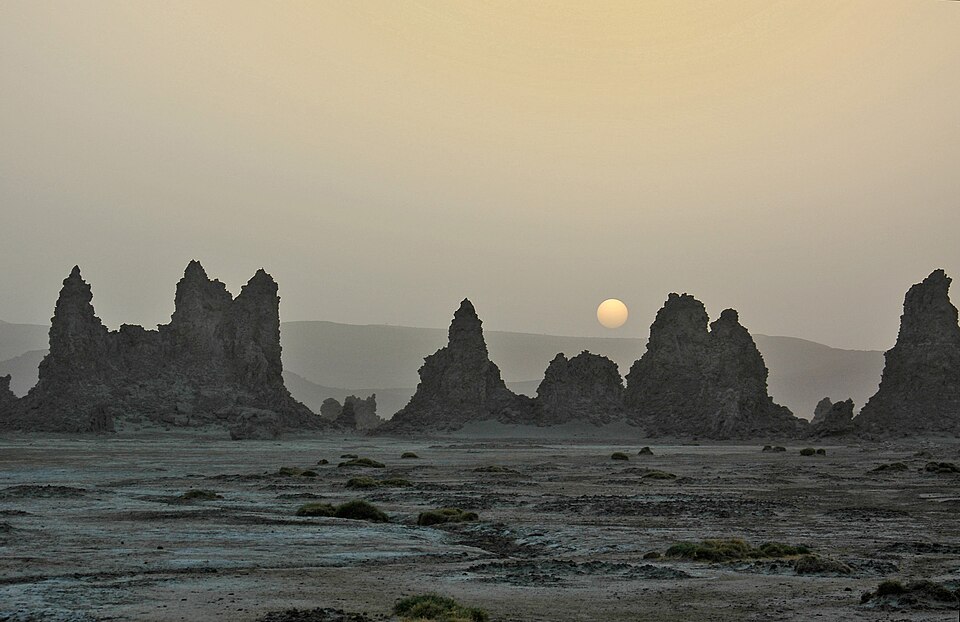
Photo: Lake Abbe · Rolf Cosar · CC BY 3.0
First-Timer Guide 🇩🇯Djibouti: What to Know Before You Go
Destination Intel / Djibouti
A typical first trip here runs about $725 to $1,000 per person for 7 days at a mid-range style, before flights. This is a rough estimate from PINYA regional pricing, not hand-reviewed yet, and not a live price. Real cost moves with your dates and exchange rates. Get a tailored number in the Budget Calculator, or have The Crown price your exact trip.
Culture, Food and Etiquette
- Skoudehkaris, rice cooked with lamb and warming spices including cumin, coriander, and cardamom; Djibouti's national rice dish reflecting Arab and Somali culinary influences
- Fah-fah, slow-cooked goat soup with vegetables and spices; the definitive Djiboutian comfort food eaten especially on Fridays
- Injera with stews, Ethiopian and Eritrean-influenced spongy fermented flatbread served with spiced lentil or meat stews; common in the significant Habesha community
- Fresh fish from the Red Sea, grilled or fried yellowfin tuna, grouper, and kingfish; Djibouti City's port markets supply exceptionally fresh seafood
- Independence Day (June 27), celebrates independence from France in 1977 with military parade, music, and festivities in Djibouti City
- Eid Al-Fitr, the biggest celebration in this Muslim-majority nation; three days of communal prayers, feasting, and family reunions
- Afar salt trading, Afar nomads have harvested salt from Lake Assal (the lowest point in Africa) for centuries; camel caravans still travel ancient trade routes
French and Arabic are the official languages. Somali (Issa) and Afar are the most widely spoken national languages.
English is spoken at international hotels and military facilities. Key French phrase: "Bonjour" means hello.
Djibouti is one of the most strategically important countries in the world, it hosts the US, French, Chinese, and Japanese military bases. It is generally safe for tourists and has some remarkable natural attractions including whale sharks and unique geological sites.
- Djibouti is a Muslim country, dress modestly, particularly for women; avoid revealing clothing outside of tourist hotels and beaches
- Qat (khat) chewing is a major afternoon social tradition; chewing begins at midday, expect slower service and reduced activity from early afternoon
- Greet people with "As-salamu alaykum" and take time for pleasantries, bypassing greetings is impolite
- Heat in Djibouti is extreme (often 45°C+), plan outdoor activities for early morning only; carry water at all times
Getting Around
- Djibouti City is compact and easy to get around by taxi.
- A 4x4 and a guide help for Lake Assal and the interior.
- Boats reach the Gulf of Tadjoura and the nearby islands.
Source: travel.state.gov
What moves the cost: Djibouti is known as a pricier destination, and the salt lakes and diving are the main draw.
Common Questions
Do US citizens need a visa to visit Djibouti?+
Source: travel.state.gov
Is Djibouti safe for first-time travelers?+
Source: travel.state.gov
Latest for Djibouti
Updates for Djibouti will appear here as they are published. Every update cites official sources, so you can plan on it.