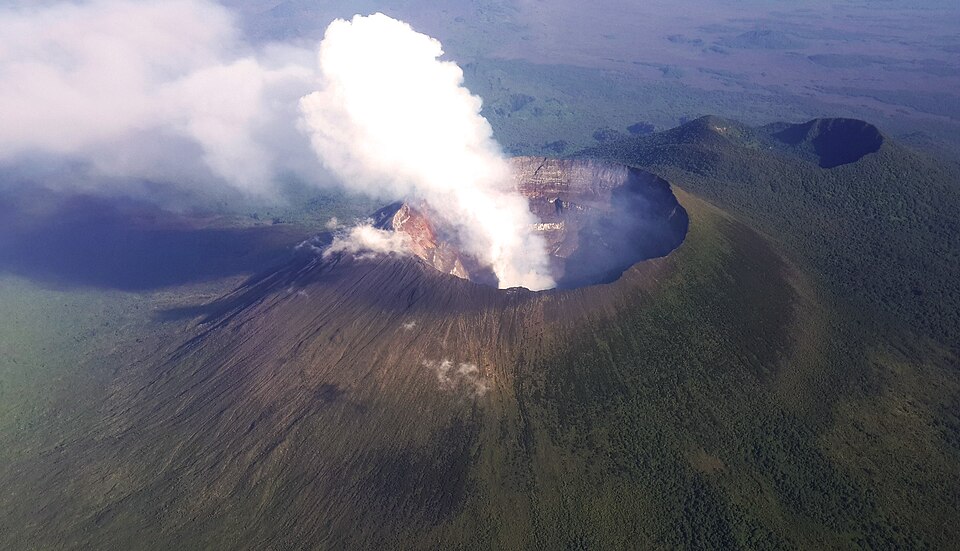
Photo: Mount Nyiragongo · MONUSCO / Neil Wetmore · CC BY-SA 2.0
First-Timer Guide 🇨🇩Democratic Republic of Congo: What to Know Before You Go
Destination Intel / Democratic Republic of Congo
Culture, Food and Etiquette
- Moambe chicken (poulet à la moambe), chicken braised in palm nut paste with chili and spices; considered the national dish and shared across central Africa
- Fufu, pounded cassava or plantain dough eaten with fish or meat stews; the caloric foundation of the Congolese diet
- Saka-saka (pondu), cassava leaves slow-cooked with palm oil, onion, and fish or meat; eaten multiple times daily in most households
- Liboke, meat or fish wrapped and steamed in banana or marantaceae leaves; a forest cooking technique that produces intensely flavored results
- Makemba, fried or roasted plantains sold from every street corner in Kinshasa; the city's definitive snack food
- Independence Day (June 30), independence from Belgium in 1960; celebrated with rallies, music, and dancing nationwide
- Festival Amani, annual peace music festival in Goma in eastern DRC; a symbol of resilience featuring Congolese and international artists
- Congolese rumba live music scene, Congolese rumba (UNESCO Intangible Heritage) is the DRC's greatest cultural export; live music in Kinshasa's nganda bars is a nightly tradition
- Kongo Kingdom ancestral ceremonies, Bakongo communities in the west hold annual ceremonies honoring royal ancestors through drumming, dance, and offerings
- Kinshasa contemporary arts scene, the Ndaku Ya La Vie est Belle collective and Kinshasa's vibrant art community celebrate Congolese creativity through exhibitions and performances
French is the official language; Lingala, Swahili, Kikongo, and Tshiluba are the four national languages. Lingala is the language of Kinshasa, the military, and Congolese music. Key Lingala phrases: "Mbote" (hello), "Matondi" (thank you), "Sango nini?" (what's the news / how are things?). Congolese people are expressive, musical, and deeply social, conversation flows easily and music is central to everyday life. The DRC requires careful travel planning; consult current advisories for specific regions before visiting.
- Greet people with warmth and take time for conversation, rushing interactions is seen as disrespectful
- Dress respectfully outside of Kinshasa's modern neighborhoods; revealing clothing is inappropriate in most communities
- Photography requires consent and caution, photographing military, police, or government buildings is prohibited and can have serious consequences
- The DRC's vast size means cultures, languages, and customs vary enormously, approach each region with specific knowledge and local guidance
Common Questions
Is the Democratic Republic of the Congo safe to visit right now?+
Source: travel.state.gov
Latest for Democratic Republic of Congo
Updates for Democratic Republic of Congo will appear here as they are published. Every update cites official sources, so you can plan on it.